2026-09-01 · Marco Delgado
Water Damage Restoration San Francisco: Complete Homeowner's Guide
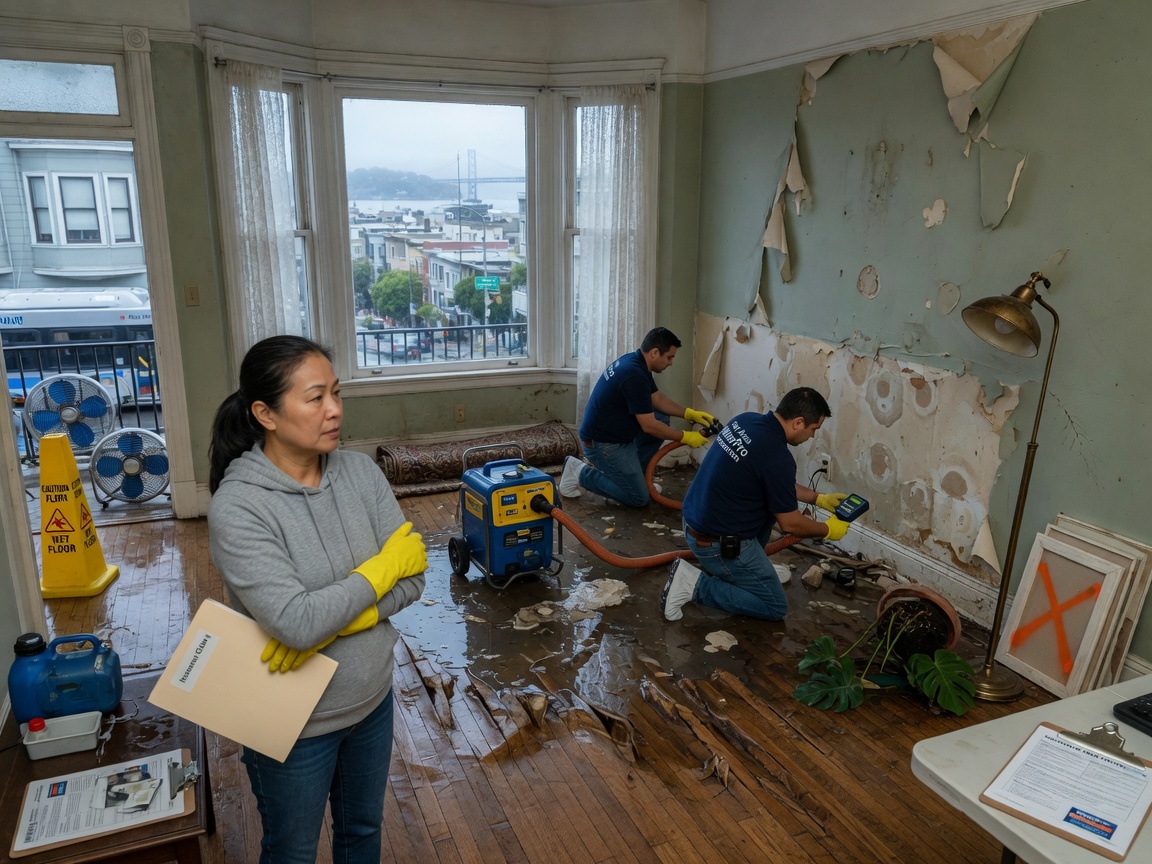
Water damage restoration in San Francisco starts with locating the source, removing standing water, drying affected materials, and restoring the structure, often taking 3 to 14 days depending on the volume of water and materials involved. Older homes built before 1940 in neighborhoods such as the Mission District around 1195 Valencia St commonly feature plaster walls, hardwood floors, and crawl spaces that trap moisture longer than newer construction. San Francisco's winter rains and persistent fog increase the risk of slow leaks through aging roofs and pipes, while the city's hilly terrain directs runoff toward lower-lying properties in areas like Bernal Heights and Potrero Hill.
Common Causes of Water Damage in San Francisco Homes
San Francisco's housing stock includes many Victorians and Edwardians with original plumbing that can fail after decades of use. Burst pipes during cold snaps, roof leaks from heavy winter rains, and appliance failures in kitchens and bathrooms rank among frequent issues. Homeowners in the Mission District and surrounding areas like Daly City often see water enter through foundation cracks where soil shifts on slopes. 10 Common Causes of Water Damage in San Francisco Homes outlines these patterns with local examples. Fog-driven condensation also contributes to hidden moisture behind walls in buildings constructed before modern vapor barriers.
Terrain plays a direct role: properties on steeper grades experience more surface water pooling against foundations during storms. Nearby cities such as South San Francisco and Brisbane share similar older stock and drainage challenges. Addressing these sources early prevents mold growth that can appear within 48 hours in humid coastal conditions.
Initial Assessment and Water Extraction
A thorough inspection identifies hidden moisture using moisture meters and thermal imaging, especially in multi-story homes where water travels through floor joists. Extraction begins with pumps for standing water followed by industrial vacuums for carpets and padding. In San Francisco homes, crews often remove baseboards and drill small holes in walls to reach trapped water in plaster and lath construction common near Valencia Street. Emergency Water Damage Restoration San Francisco: What to Do First details the first 24 hours after discovery. Technicians document every step for insurance claims while protecting salvageable items.
Extraction equipment runs continuously until readings drop below 15 percent moisture content. Hilly lots require extra attention to exterior grading to prevent re-entry of water during the next rain event.
Drying, Dehumidification, and Mold Prevention
After extraction, air movers and dehumidifiers dry the space, with commercial units pulling 70 to 150 pints of moisture daily in typical San Francisco conditions. Older homes with limited ventilation take longer because plaster and hardwood retain water. Technicians monitor progress daily and adjust equipment placement to reach behind cabinets and under subfloors. This phase usually lasts 3 to 7 days before repairs begin.
Mold prevention includes applying antimicrobial treatments to affected wood and drywall. Properties in fog-prone zones like the Mission and Potrero Hill benefit from extra dehumidification cycles to counter ambient humidity that can reintroduce moisture.
Repair and Restoration Work
Repairs replace damaged drywall, flooring, and insulation while matching original finishes where possible. In pre-1940 homes, crews often rebuild sections of lath and plaster rather than installing modern drywall to maintain structural integrity. Flooring restoration may involve refinishing hardwood or installing new underlayment beneath carpets. Water damage restoration crews coordinate with homeowners on material choices that suit the age and style of the building.