2026-09-01 · Marco Delgado
10 Common Causes of Water Damage in San Francisco Homes
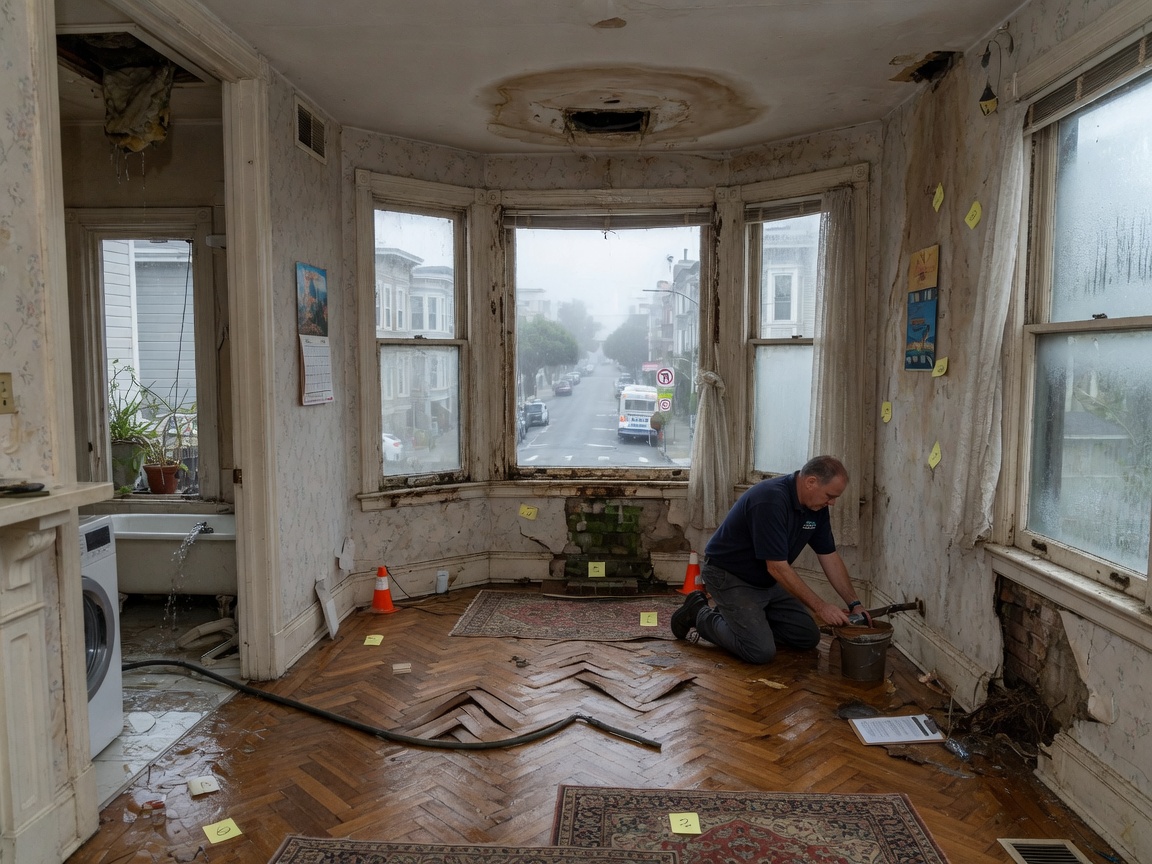
San Francisco homes face water damage most often from aging plumbing in pre-1940 buildings, roof leaks during 20–30 inches of annual winter rain, and appliance failures in kitchens and laundry rooms. These patterns show up across the Mission District, Noe Valley, and surrounding areas where many properties sit on slopes that direct runoff toward foundations.
Aging Plumbing in Pre-War Homes
San Francisco's housing stock includes thousands of Victorians and Edwardians with original galvanized steel pipes that corrode after 40–60 years. In the Mission District near 1195 Valencia St, crews regularly open walls to find pinhole leaks that have soaked subfloors for weeks. Earthquakes add stress cracks at joints, turning minor seepage into slab leaks. Homeowners notice musty odors first in basements and crawl spaces. Replacing these lines with copper or PEX during remodels cuts future risk sharply. Local soil movement on hillsides accelerates joint failure compared to flat inland neighborhoods.
Roof Leaks from Winter Storms
Heavy rains between November and March overwhelm older composition roofs on homes in Bernal Heights and Potrero Hill. Missing shingles or cracked flashing around chimneys allow water to enter attic spaces and travel down interior walls. Fog drip adds constant moisture that promotes mold on rafters. Crews see the worst damage after atmospheric river events when 3–5 inches fall in 24 hours. Regular gutter cleaning prevents overflow that soaks siding. Unchecked, these leaks reach electrical boxes and require full ceiling replacement.
Appliance and Fixture Failures
Washing machines, dishwashers, and 40–50 gallon water heaters fail most often in 8–15 year old installations common in San Francisco rentals. Supply hoses burst under city water pressure, flooding laundry rooms in seconds. In the Castro and Hayes Valley, older homes lack shutoff valves near appliances, extending damage to adjacent units. Refrigerator ice makers leak behind cabinets when lines freeze during rare cold snaps. Checking hoses annually and installing stainless-steel braided lines prevents most incidents.
Poor Drainage on Hillside Lots
Many properties in Twin Peaks and Diamond Heights sit on steep grades where downspouts empty directly against foundations. Clay-heavy soil holds water, creating hydrostatic pressure that pushes through cracks. French drains installed 10–15 feet from the house redirect flow to the street. Without them, water enters finished basements during the first heavy rain of the season. Grading adjustments and extending downspouts 5–6 feet outward solve the majority of these recurring problems.
Sewer Line Backups
Tree roots from mature plantings invade clay sewer laterals under sidewalks in the Mission and Glen Park. When roots block flow, wastewater backs up through floor drains during storms. San Francisco's combined sewer system overflows more readily in low-lying blocks near the bay. Video inspections reveal breaks where old pipes have shifted from seismic activity. Annual root treatment and lining projects extend service life without full excavation.
Window and Door Leaks in Foggy Conditions
Persistent marine layer moisture enters around single-pane windows in older frames, especially on west-facing walls in the Sunset and Richmond districts. Failed caulk and warped wood sills let water reach subflooring. Condensation on cold glass drips onto sills and promotes rot. Replacing with double-pane units and adding exterior flashing stops the cycle before drywall softens.
HVAC Condensation and Overflow
Central air systems in multi-unit buildings produce condensate that drains through small lines prone to algae clogs. When lines back up, water spills into ceilings below. In buildings near 1195 Valencia St, rooftop units on flat roofs collect leaves that block drains during winter storms. Regular coil cleaning and float switch testing catch issues before they reach living spaces.
Foundation Cracks from Seismic Activity
Minor earthquakes shift foundations enough to open hairline cracks that admit groundwater during rains. Homes on fill in the Marina and South of Market see this more than bedrock areas. Epoxy injection and exterior waterproofing membranes address the source. Ignoring these allows water to reach rebar and accelerate structural deterioration over time.
Overflow from Sinks, Tubs, and Toilets
Clogged drains and running toilets overflow most often in older bathrooms with low-flow fixtures installed in the 1990s. In multi-story Victorians, water travels through floor joists to lower levels before discovery. Installing automatic shutoff valves on main lines limits volume. Prompt attention to slow drains prevents the majority of these avoidable events.
Homeowners who inspect plumbing, roofs, and drainage each fall reduce emergency calls. When damage occurs, water damage restoration crews respond from the Mission District base. For step-by-step guidance after an incident, review the complete homeowner's guide. Early detection in San Francisco's specific conditions keeps repairs contained to the original source area.