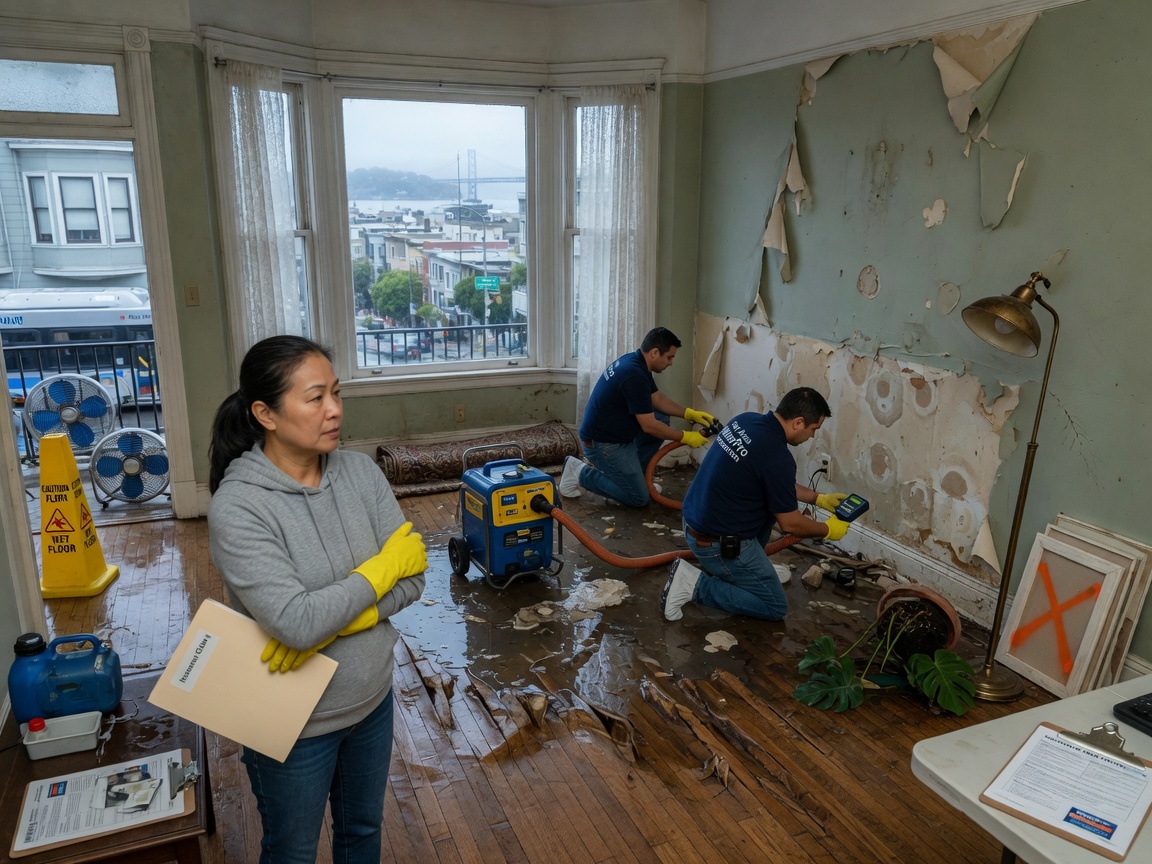
Rodeo sits along the San Pablo Bay shoreline with many 1950s and 1960s single-family homes on smaller lots that back up to Rodeo Creek or the waterfront. Winter rains often push water through older crawl spaces and slab foundations, especially on streets like Parker Avenue where drainage flows toward the bay. Our team based at 1195 Valencia St responds directly to these calls, extracting standing water and drying wall cavities before mold sets in on the older plaster and lath construction common here.
Access into Rodeo from the east bay via I-80 can slow during peak commute hours, so we stage equipment for quick deployment once we clear the Carquinez Bridge. Properties near the shoreline face tidal influence and higher groundwater, which changes how we place dehumidifiers and monitor moisture in slab edges. We work through Mon–Fri 8am–6pm and Sat 9am–2pm to match when residents are home to grant entry.
Local plumbing runs in many Rodeo homes still use galvanized lines that corrode over decades, creating sudden leaks under kitchens and bathrooms. We map these failures against the actual lot layout so we can open only the necessary sections of flooring instead of tearing up entire rooms.
Around Rodeo
We regularly work near:
- 📍Rodeo Creek
- 📍Parker Avenue
- 📍San Pablo Bay shoreline
- 📍Rodeo Hills Elementary School
- 📍Stewart Elementary School
- 📍I-80 corridor through Rodeo
Water Damage Restoration in Rodeo — Local Notes
- •Older homes near Rodeo Creek often have shallow crawl spaces that flood first during heavy rain, requiring targeted extraction before moisture migrates into floor joists.
- •Properties along Parker Avenue sit on lots with limited side access, so we use smaller portable equipment to reach back bedrooms without damaging fences or landscaping.
- •San Pablo Bay proximity means higher humidity lingers after storms, so we run longer drying cycles and place sensors in exterior walls facing the water.
- •Many 1960s slabs in Rodeo lack proper vapor barriers, so we test and treat the concrete itself rather than assuming surface drying is enough.